Chemistry ⚗️

What is an element, compound and a mixture?

Image of an element

Element

An element is a substance made of only one type of atom. Examples include Hydrogen, Nitrogen, Oxygen, Helium, Silver, Gold, e.t.c.

Image of an compound

Compound

A compound is a substance made of two or more types of atom chemically bonded together. It is commonly named with the metal first and if there's 2 elements, the compound ending has an 'ite'. If there is 3 or more elements and one of them is oxygen, the compound's name will end in 'ate'.
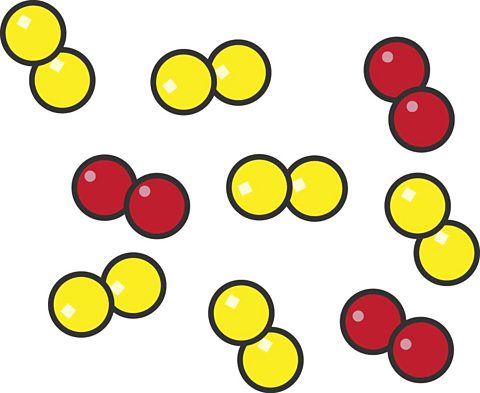
Image of a mixture

Mixture

A mixture is a substance made up of two or more different elements or compounds that are physically combined, not chemically bonded.
Separating Mixtures:

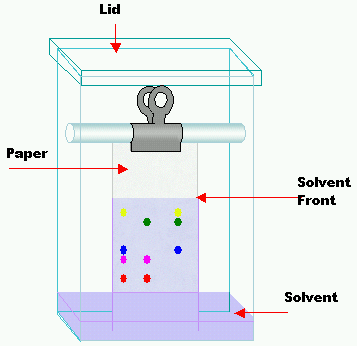
Image of a chromatography diagram.

Chromatography

Chromatography is a method used to separate a soluble solid from a soluble solid in a mixture based on how they move through a medium.

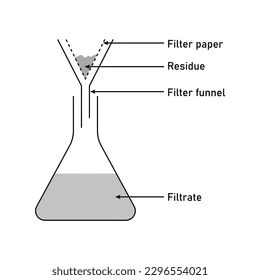
Image of a filtration diagram.

Filtration

Filtration is a method of separating an insoluble solid from a liquid by passing the mixture through a filter that traps the solid.

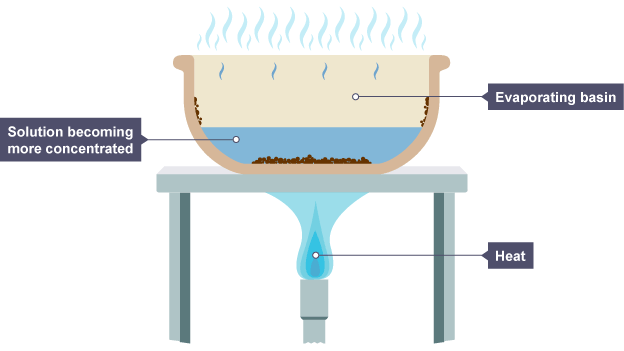
Image of a crystallization diagram.

Crystallization

Crystallization separates a soluble solid and liquid from each other. It happens by forming solid crystals as the solvent evaporates or cools.

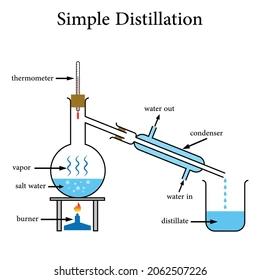
Image of a distillation diagram

Distillation

Distillation separates liquids that fully mix (miscible) by heating them to form vapors and then cooling the vapors to get pure liquids bassed on different boiling points.

Isotopes and the electronic configuration of ions

Isotopes

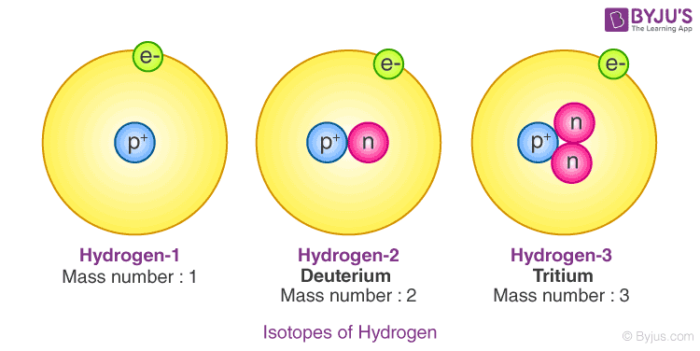
Image of a diagram of hydrogen's isotopes.

Isotopes are atoms of the same element that have the same number fo protons but different numbers of neutrons, so they have the same chemical properties but different mass numbers. Because of the difference in mass, isotopes of an element can have slightly different physical properties, such as melting points, boiling poings, rates of diffusion, and even how they interact with a magnetic field. Some are stable, while others are radioactive and decay over time, releasing radiation. For example, carbon has three main isotopes — carbon-12, carbon-13, and carbon-14 — all with six protons but differing in neutrons, which affects their physical behaviour. Relative Atomic Mass (Ar)=((mass of isotope 1 × abundance 1)+(mass of isotope 2 × abundance 2)) divided by 100.


Electronic configuration of ions

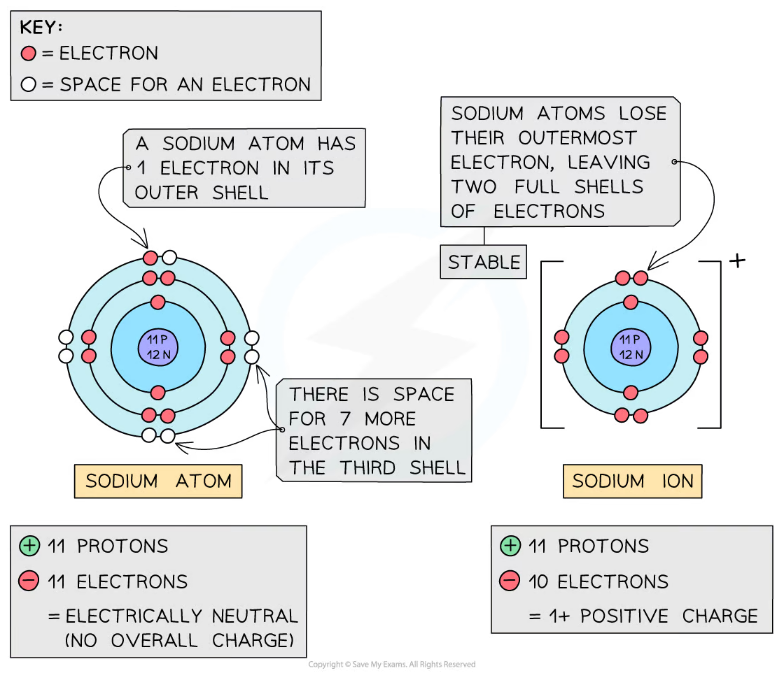
Image of atom and ion diagram

An ion is a charged particle. Atoms NEED a full outer shell to be able to become stable. For example, a fluorine (F) atom would have 9 protons and 9 electrons, while a fluorine ion will have 9 protons and 10 electrons. A key rule of thumb is that metal ions will always be positively charge and all the non-metal ions will always be negatively charged. Remember to use a dot and cross diagram in exams.

Ionic and covalent bonding

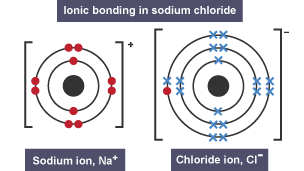
Image of a diagram of ionic bonding.

Ionic bonding

Ionic bonds form when metal ions bond with non-metal ions. When ionic bonds are formed between atoms, a giant ionic lattice is formed, where there is lots of electrostatic attraction — attraction between all of the ions. There is a lot of it, the attraction happens in all directions. Strong attractions mean changes in properties: it gets really high melting and boiling points. Ionic compounds from crystalline structures, like salt, for example. Sometimes ionic compounds are able to conduct electricity. This is because it only happens if the ionic compounds are molten or dissolved, due to the fact that it can only conduct electricity when there are free electrons or ions. These chemical properties can influence a material's uses.

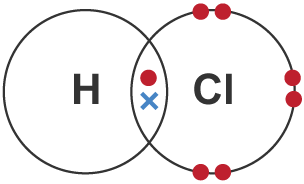
Image of a diagram of covalent bonding.

Covalent bonding

Covalent bonding is a type of chemical bond that occurs when two atoms share one or more pairs of electrons to achieve a full outer shell and become more stable. This usually happens between non-metal atoms, which both have high electronegativity and cannot easily lose electrons. The shared electrons count toward the outer shell of both atoms, allowing each to reach a stable electron configuration. Covalent bonds can be single, double, or triple, depending on the number of electron pairs shared. Substances with covalent bonds generally have low melting and boiling points, do not conduct electricity in solid form, and may exist as molecules or giant covalent structures. Examples include water (H₂O), carbon dioxide (CO₂), and diamond (a giant covalent structure of carbon).